Case Study in Hemispheric Capture: How Beijing Exploited a Corrupt Politician in Panama to Bend a Nation’s Destiny

© Luis Alvarado Alvarado / Shutterstock
In late 2017, President Varela received a confidential message urging him not to mention Beijing’s “donation” of ¥1 billion (≈ US $145 million) because it might “look like the price for the rupture with Taiwan.”
That money never appeared in Panama’s treasury; neither the Ministry of Education nor the Ministry of Economy and Finance could locate it. The episode, documented in Varelaleaks: Desclasificando a un Expresidente, revealed how Varela privately negotiated Panama’s diplomatic realignment while enriching himself and his network.
Within months, Chinese state firms gained access to ports, bridges, telecom networks, and surveillance systems adjacent to the Panama Canal. Washington reacted with alarm, ultimately blacklisting Varela in 2023 for “significant corruption”.
This report reconstructs how Beijing’s methods, coupled with one political leader’s venality, reshaped Panama’s trajectory and exposed the vulnerabilities of democratic governance in Hispanic America.
Breaking with Taiwan: The Secret Payoff Problem
The June 2017 break with Taipei was planned in secrecy. Leaked messages confirm that Beijing’s billion-yuan “donation” never entered public accounts. Publicly, Vice President Isabel de Saint Malo denied any concessions; privately, Varela’s family liquor company signed a US $38 million export deal with a Chinese importer just weeks after recognition.
These exchanges illustrate policy for sale—foreign recognition traded for private gain—aligning with documented PRC tactics of leveraging “corrosive capital” to capture elites in fragile democracies.
Lo que sí fue una miseria fue lo que hizo Varela: pedirle 70 millones a Taiwán semanas antes de romper relaciones. Eso es ser un mal agradecido. Y ahí están los Varelaleaks que cuentan esa historia completa. pic.twitter.com/fnh4NwNOrR
— Aquiles Sandoval (@AquilesSan52834) November 20, 2025
Strategic Inroads: Ports, Bridges, and the Rail That Never Made Sense
Between 2016 and 2018, Chinese state enterprises secured strategic projects:
- Landbridge Group’s Colón Container Port on the Canal’s Atlantic side (a US $900 million project later frozen), positioning a PRC logistics hub near the Caribbean entrance.
- CHEC–Jan De Nul’s Amador cruise port and China Construction America’s adjacent convention center at the Pacific gate.
- Fourth Bridge over the Canal — awarded to a PRC consortium despite a US $400 million cost premium — prompting U.S. concerns the bridge could serve as a “scanner” over shipping routes.
- Panama City–Chiriquí rail study, funded by Beijing, deemed economically unviable by Canal Administrator Jorge Quijano but championed by Varela for political symbolism.
Secretary Mike Pompeo later warned that PRC projects in Panama exemplified “predatory” economic practices.
The Amador Embassy: “Poking the Eagle While Dancing with the Bear”
Varela’s plan to grant China four hectares on the Amador Causeway for a new embassy within sight of ships entering the Canal provoked a diplomatic crisis. U.S. Ambassador John Feeley cautioned that every transiting sailor would see “proof of China’s rising power.” Business magnate Stanley Motta warned Varela “not to poke the eagle when dancing with the bear.” The authors surmise Motta meant to say the dragon.
White House official Juan Cruz described the situation as “a minefield,” stressing Washington viewed PRC moves as a threat “to take the Canal.” Soon afterward, U.S. officials threatened visa revocations for Panamanian figures involved. Varela capitulated, relocating the site to Clayton—away from the Canal.
The affair became a symbol of how elite corruption can transform geography into geopolitics, forcing small states into great-power standoffs.
The Huawei Fault Line: Surveillance and Digital Capture
Defying a personal pledge to Ambassador Feeley, Varela substituted Huawei for General Dynamics in Panama’s C5 security center. Huawei offered financing and “donated” equipment—an archetypal Belt and Road play. Feeley warned that SOUTHCOM would see it as “the fox in the henhouse.”
The completed center, officially a PRC grant, embedded Huawei systems inside Panama’s security apparatus, enabling a constant flow of Chinese technicians through the country.. U.S. reports later confirmed that Chinese surveillance networks in Hispanic America mirror those used for intelligence collection elsewhere.
Narrative Control and Elite Co-optation
When Pompeo’s 2018 visit generated headlines about China, Varela ordered allies to purge “China” from media coverage and dispatched his ambassador on television to deny it. He leaned on friendly outlets owned by major business families, offering advertising incentives and state contracts.
Meanwhile, ex-journalist Fernando Berguido provided talking points to defend Beijing’s role, labeling U.S. concerns “diplomatic bullying.” Through compliant media, patronage, and selective leaks, Varela manufactured consent for Panama’s pivot until the Varelaleaks exposed the machinery.
U.S. Countermeasures and the Aftershock
Washington’s reaction combined coercion and correction: halting the Amador embassy, discouraging Huawei, and re-anchoring Panama through initiatives such as Growth in the Americas (Americas Crece). By 2019 the successor government slowed or canceled several PRC projects. In 2025, Panama formally withdrew from the Belt and Road Initiative.
The U.S. visa ban on Varela in 2023 was the definitive rebuke. It underscored that corruption and foreign influence are national-security issues, not merely domestic crimes.
Current Status of Juan Carlos Varela (2025)
Varela remains in Panama, dividing his time between his Altos del Golf residence in Panama City and his family estate in Penonomé, Coclé. He has not left the country since the U.S. sanction and is barred from entry into the United States under the State Department’s designation for significant corruption.
While he occasionally issues public statements—most recently defending his 2017 decision to recognize Beijing—he largely avoids public events and moves under low-visibility security arrangements.
Despite indictments tied to the Odebrecht bribery and money-laundering schemes, Varela has not been convicted or imprisoned, owing to procedural delays and political shielding from allies within the Panameñista Party and business patrons linked to construction and liquor conglomerates.
Analysts note that these elite networks and a fragmented judicial system have stalled his prosecution, leaving him discredited but secure within Panama’s opaque legal structure. He thus remains a case study in how political connections and institutional inertia can shelter a former head of state from accountability.
Varela’s tenure illustrates the anatomy of hemispheric capture: how Beijing leverages corruption to engineer political realignments and how a single leader’s greed can pivot a nation’s destiny. The PRC’s tactics—concessional loans, technology “gifts,” and elite courtship—found fertile ground in Panama’s weak institutions. The U.S. response, though belated, reaffirmed that transparency and integrity are the first lines of defense in the hemisphere’s struggle for sovereignty.
For Panama, the lesson endures: national interest cannot be outsourced, and prosperity built on secrecy invites dependency. The Canal remains the hemisphere’s choke point between two oceans—and now, thanks to the corrupt nature of a politician, Panama must struggle between two systems of power.
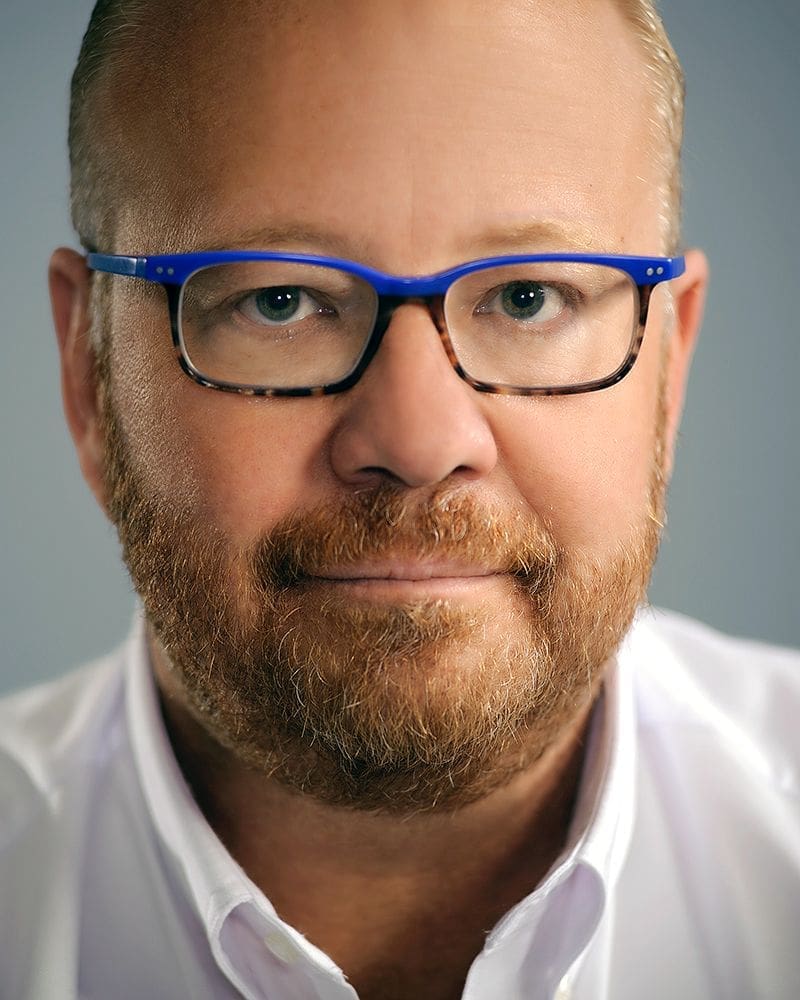
CDR José Adán Gutiérrez, USN (Ret.), Senior Fellow, MSI²
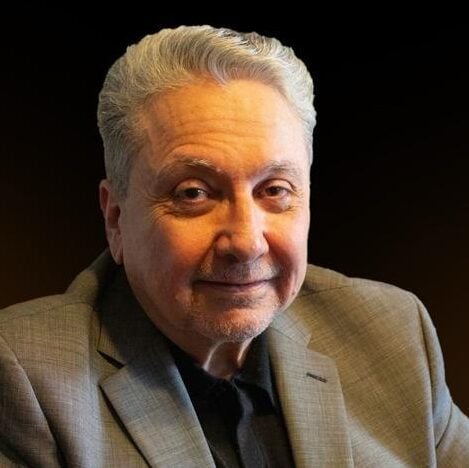
Dr. Rafael Marrero, Chief Economist & Founder, MSI²
Originally published by the Miami Strategic Intelligence Institute, a conservative and nonpartisan think tank specializing in policy research, strategic intelligence, and consulting. The views expressed are those of the author and do not necessarily reflect the official position of the Institute. For more information, visit www.miastrategicintel.com
The views expressed in this article are those of the author and do not necessarily represent the official position of Gateway Hispanic.
About The Author