
Republicans are making significant gains on election integrity through a broad, multipronged strategy centered on prioritizing engagement with state legislatures, courtrooms, and redistricting fights, despite the SAVE America Act, election legislation backed by President Donald Trump, showing few signs of life in the Senate.
The shift became especially clear over the past two weeks — first when the Supreme Court narrowed the legal force of Section 2 of the Voting Rights Act in Louisiana v. Callais on April 29, and again last week when the Supreme Court of Virginia struck down a Democratic redistricting referendum that could have dramatically reshaped the state’s congressional delegation ahead of the midterm elections.
Put together, the rulings underscored how the conservative election integrity movement has run a contingency plan to reshape elections while the Trump-backed legislation languishes in Congress.

Even without the SAVE America Act, Republicans and conservative legal groups have increasingly shifted toward a decentralized strategy focused on state-level policymaking and litigation — with all signs showing that it is working.
“What changed after 2020 is that election integrity became essentially a plank in the Republican platform,” Honest Elections Project Executive Director Jason Snead told the Washington Examiner.
In the six years since Snead’s group was founded, he has increasingly leaned on coordination with Republican lawmakers, secretaries of state, and legal teams across the country to cement into law policies that Snead touts as “making it easier to vote, but harder to cheat,” in addition to efforts to reduce foreign influence on U.S. elections.
“We’ve really focused on the states because that’s where the Constitution puts primary authority over elections,” Snead said.
GOP state legislatures mark the center of election security efforts
That approach has produced a broad policy push across Republican-led states in recent years. According to the HEP, at least nine states have enacted bans on foreign funding in ballot measure campaigns over the past two years, while 17 states have passed ranked choice voting bans.
More importantly, the HEP has also supported policies that are now cornerstones of Trump’s voting policy agenda, such as proof-of-citizenship bills, voter ID laws, voter-roll maintenance measures, and legislation requiring ballots to be received by Election Day in order to be counted.
What matters for the GOP is that, for now, the public increasingly sees a portion of Trump-backed election integrity measures as beneficial for restoring confidence in elections after the turmoil and distrust surrounding the 2020 election cycle. Democrats, meanwhile, maintain that the policy direction from Republicans is instead geared toward making voting harder and narrowing the electorate.
One of the common criticisms of the SAVE America Act is the notion that states should be free to conduct their own elections, while the legislation would impose rules for elections from the federal level. For Republican-led states, that is where Snead comes in.
A pillar example of his work is in Wyoming, where Secretary of State Chuck Gray, a Republican, has adjusted his state’s policies into what he described as a “model on election integrity across the United States.”
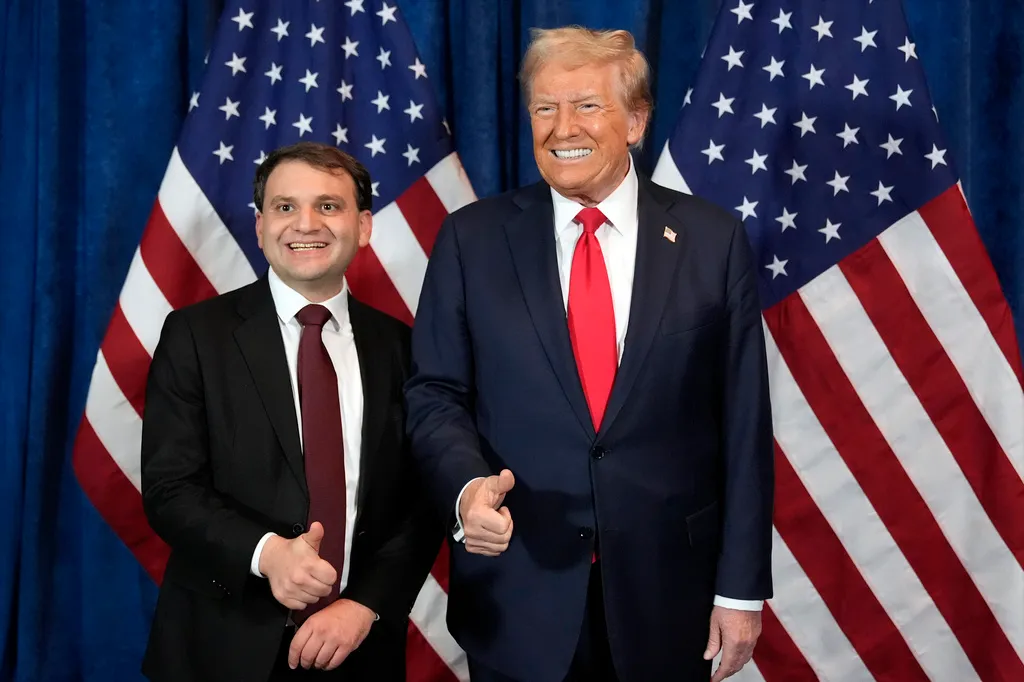
Gray, who is running for Wyoming’s at-large House district, has championed an array of election law changes during his tenure, many of which Snead’s group has helped promote.
“Honest Elections Project has done a lot of great work in Wyoming and across the nation in advocating for these common-sense election integrity measures,” Gray said, citing the group’s work on banning private election funding, foreign funding of ballot measures, and ranked choice voting.
Ohio is another state that has emerged as a groundswell for election integrity laws, many of which mirror Wyoming’s. State Sen. Theresa Gavarone, a Republican, told the Washington Examiner that many of the state’s reforms initially faced fierce backlash before becoming normalized once implemented.
“People were saying it was racist, people were calling me all sorts of names,” Gavarone said of Ohio’s voter ID law, which took effect in April 2023. “We’ve run a few elections now, and I really haven’t heard any complaints about it since.”
GOP turns to courts as SAVE America Act flounders
Not every state in this national legal fight has the same perks for the GOP like Wyoming, where a like-minded secretary of state is much more open to election security policies.
That blind spot is where the Republican National Committee has tuned its attention, taking on more than 100 election-related lawsuits in 30 states to shore up any gains it can make in courts before November, encompassing policies such as voter ID laws, noncitizen voting, election administration, and mail ballot rules.
One RNC official told the Washington Examiner in March that the party is increasingly trying to accomplish through litigation what Republicans cannot currently achieve through Congress.
“We are doing through a judicial, piecemeal approach, which is what’s available to us, what the SAVE Act is trying to do through legislation,” the official said.
The RNC’s broader legal focus already includes several links to the Supreme Court’s consequential 2025-26 term.
Earlier this year, the RNC argued Watson v. Republican National Committee before the high court, asking the justices to strike down Mississippi’s law allowing mailed ballots to be counted if they arrive up to five days after Election Day, so long as they are postmarked on time. The justices have yet to issue a ruling, but one that favors the RNC would have a cascading effect in other battleground states with extended ballot deadlines, including in Pennsylvania.
The RNC is also asking the Supreme Court to intervene in battleground states where officials are not aligned with Republican-backed election policies, seeking the justices to take up disputes over Pennsylvania’s undated mail-in ballot requirements and Arizona’s proof-of-citizenship voter registration laws.
Shawna Bolick, an Arizona Republican who has worked on election legislation since 2020, told the Washington Examiner that Democrats in the state have resisted efforts to tighten safeguards.
“You would think that they would want to make sure only U.S. citizens were voting, but unfortunately, they don’t really support that,” she told the Washington Examiner.
RNC Chairman Joe Gruters previously told the Washington Examiner that Pennsylvania’s date requirement is “a simple, common-sense safeguard that protects the integrity of the state’s elections.”
“Counting ballots that are missing basic requirements like a date violates Pennsylvania law and undermines confidence in elections,” Gruters said.
The RNC’s Supreme Court petition leans heavily on arguments advanced by Judge Emil Bove of the U.S. Court of Appeals for the 3rd Circuit, a recent Trump nominee who wrote that the requirement imposes what can only be described as a trivial burden on voters.
“For a voter with a functioning pen, sufficient ink, and average hand dexterity, this should take less than five seconds,” Bove wrote in a dissenting opinion supporting reconsideration of the case.
Supreme Court reshapes redistricting fight
Republicans also received a major boost from the Supreme Court’s April 29 ruling in Louisiana v. Callais, one of the most consequential election law decisions in years.
The 6-3 ruling significantly narrowed how Section 2 of the Voting Rights Act can be used to challenge congressional maps and dealt a major blow to race-based redistricting requirements that have shaped map drawing for decades, particularly in the South.
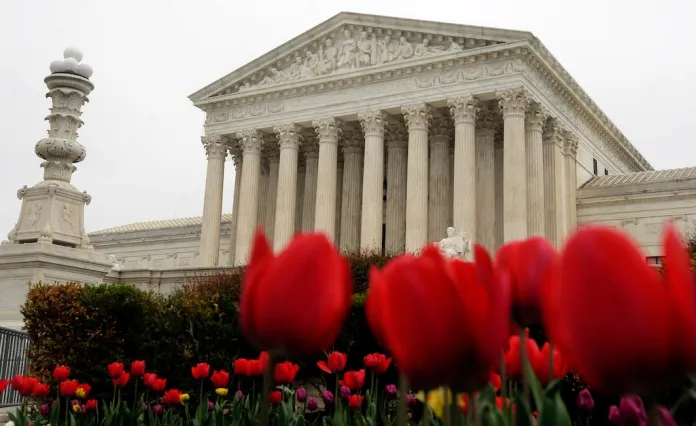
While the high court did not completely dismantle the legal standard long used to challenge maps under the Voting Rights Act, the ruling made those cases significantly harder to win for challengers going forward.
The decision has emboldened Republicans to pursue map revisions in several states where the Voting Rights Act previously mandated the creation of majority-minority districts.
At least four southern states with Republican majorities are moving to redraw their congressional maps in the wake of the landmark high court ruling, with action already underway in Tennessee, Louisiana, Alabama, and Florida, where GOP leaders there say the decision runs up against prior race-based districting mandates.
South Carolina Republicans also explored a redraw effort, though the state Senate declined this week to advance the proposal.
The most seismic development from Callais took place on Monday, when the Supreme Court allowed Alabama to begin the process of redistricting without an additional majority-minority district, after it was forced to include a second following a dispute surrounding its 2023 map.
Alabama presently has a 5-2 Republican majority in Congress, which, prior to litigation over the 2023 map, had a 6-1 GOP-friendly split with a minority-favored district covering Birmingham.
Virginia ruling halts Democratic map push
Republicans also scored a major victory last week in Virginia, in a massive blow to Democrats, who had hoped to net up to four seats with the redistricting referendum that narrowly passed on April 21.
The Supreme Court of Virginia invalidated the referendum that would have authorized new congressional maps heavily favoring Democrats, ruling that lawmakers failed to comply with the constitutional amendment process required under the state constitution.
The map that was favored by Democrats could have shifted Virginia’s current 6-5 congressional split toward a 10-1 Democratic advantage.
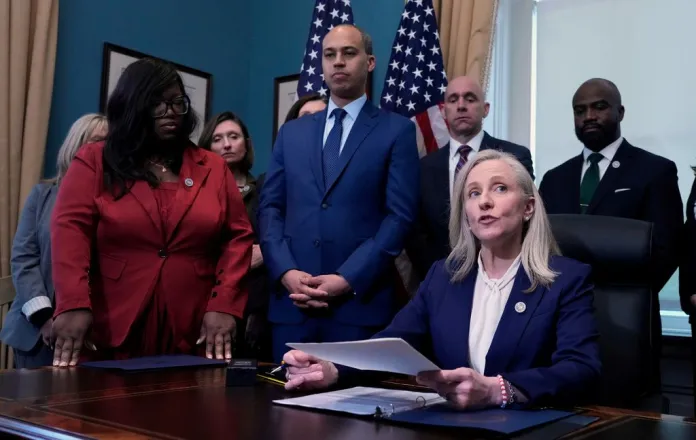
Virginia Attorney General Jay Jones, a Democrat, has already asked the state Supreme Court to stay its ruling pending a decision over its Supreme Court petition that it filed on Monday, though legal experts say the prospects for any relief are slim to none, as the legal dispute centered on the state constitution and most likely lacks a clear federal nexus.
Chief Justice John Roberts, who handles emergency petitions out of Virginia, told Republican legislators who challenged the amendment to file a response by 5 p.m. Thursday.
Democrats warn of broader rollback
Democrats and left-leaning election groups see the string of court decisions and the growing popularity of election security measures as a reason to bolster their rhetoric of resistance against the GOP.
Liberal election lawyer Marc Elias, who formerly worked for former Secretary of State Hillary Clinton during her failed 2016 presidential campaign, has framed the broader legal fight even more starkly.
“We are now witnessing the latest instance of a Supreme Court decision creating a legal and cultural permission structure to attack democracy,” Elias said in a blog post this week, referring to the Callais case. “The Republican Party has become a collection of arsonists targeting every part of civil society, liberalism and democracy.”
Snead, who has expressed confidence in his group’s efforts to help states craft secure election laws, emphasized that the gains conservatives have made since 2020 should not be seen as permanent.
“There’s no such thing as permanent victories in politics,” Snead said. “One of the long-term objectives is making sure that election integrity remains a part of the conservative platform forever.”
RNC BETS ON COURTS TO ENACT VOTER INTEGRITY MEASURES AS SAVE AMERICA ACT STALLS
He also argued that the stakes reach beyond any single election cycle, saying public confidence in elections is what allows losing candidates and voters to accept results and try again the next time.
“Democracy depends on the consent of the governed, but it also depends on the consent of the losers,” Snead said. “We have to have a system that convinces people who lose the elections that they lost fair and square.”