
A DOJ investigation netted 31 defendants, many in New York, for allegedly rigging illegal poker games. Those charged in October included several of the usual suspects, including alleged members of organized crime families. The operation also caught up several past and present members of the NBA. Among them was Portland Trail Blazers’ head coach Chauncey Billups, a member of the Naismith Memorial Basketball Hall of Fame from his 1997-2014 NBA playing career.
“Well-known former NBA players and former professional athletes, acted as ‘Face Cards’ to lure unsuspecting victims to high-stakes poker games, where they were then at the mercy of concealed technology, including rigged shuffling machines and specially designed contacts lenses and sunglasses to read the backs of playing cards, which ensured that the victims would lose big,” the DOJ alleged in a news release. “Today’s indictment and arrests sound the final buzzer for these cheaters.”
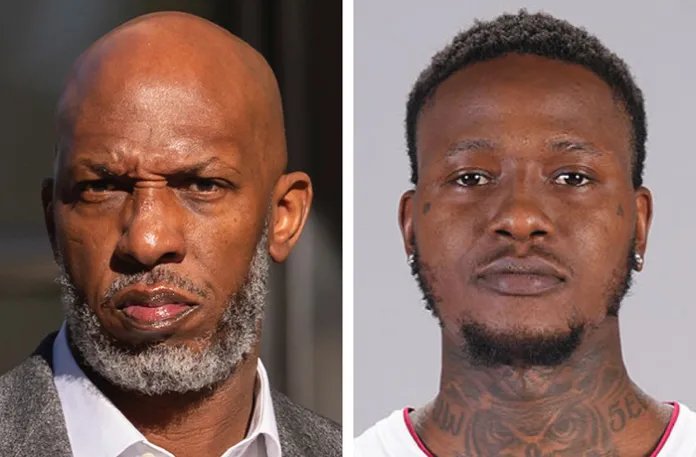
Separately in October, the DOJ also charged current and former NBA players, including Miami Heat guard Terry Rozier, in an alleged scheme to, at the very least, fix bets, and possibly throw games.
“The defendants turned professional basketball into a criminal betting operation, using private locker room and medical information to enrich themselves and cheat legitimate sportsbooks,” alleged Joseph Nocella Jr., U.S. attorney for the Eastern District of New York, in a statement.
Representatives for the league met privately with lawyers and other staff members of the House Energy and Commerce Committee in early November. The NBA promised cooperation with Congress’s own investigation, which could be much more widespread than the DOJ’s efforts.
“We will continue our investigation to ensure the integrity of the sport and support athletes,” one congressional staffer told the Athletic.
The legislation
Sen. Richard Blumenthal (D-CT) thinks he has one answer to the problem, in the form of the Supporting Affordability and Fairness with Every Bet Act, also known as the SAFE Bet Act.
“Criminal charges involving sports betting have shown a national scandal that requires standards at the federal level,” he said in a video released on social media in October.
Blumenthal said his goal was “not to prohibit gambling but to make sure we combat the twin dangers of corruption and addiction.”
Nor is this the first time this year that the senator has made a full-court press for his legislation. He first did so when he introduced it ahead of March Madness, the NCAA’s popular single-elimination college basketball playoff.
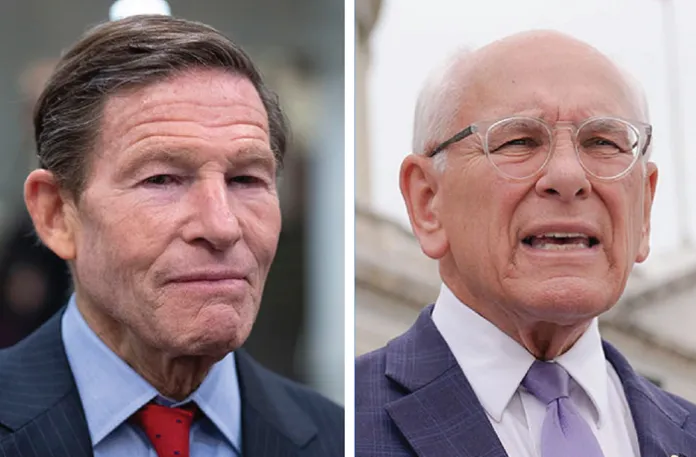
Blumenthal’s sponsorial counterpart in the House, Rep. Paul Tonko (D-NY), released a fact sheet on the SAFE Bet Act. Among other things, it would ban sportsbook marketing during live sporting events, programming designed to induce “bonus bets,” and a whole lot more.
The SAFE Bet Act would also limit gaming operators from accepting more than five deposits from a single customer in 24 hours, require operators to conduct affordability checks before accepting wagers from customers of $1,000 or more, prohibit the use of credit cards in placing wagers, prohibit the use of AI to track gamblers’ habits or offer microbets, ban prop bets on college and amateur athletes, and require a surgeon general’s report on the public health dangers of betting.
In short, in the name of safety, the bill would prohibit not all but an awful lot of betting.
Is there a sports betting crisis?
Blumenthal, Tonko, and other supporters of the FAIR Bet Act argue that it is needed because the legalization of much sports betting following a 2018 Supreme Court decision, now allowed in person by most states and online by 30 states, has led to something like a national gambling epidemic.
Why, “In 2024, Americans legally wagered a record $147.91 billion on sports, up more than 23% from 2022,” Tonko’s fact sheet warns. Further, people wagered a lot of money on the Super Bowl. And one report “found that odds of bankruptcy filing in states with legal online betting increased by as much as 25-30%.”
But it’s also possible that legalized sports betting has simply taken something that used to be handled by black markets and made the process more transparent and thus more open to criticism, findings from a report issued in April by the American Consumer Institute suggest.
“Existing narratives suggest that legalized sports betting drives increases in gambling,” economist Justin Leventhal wrote. However, an analysis of the available data did not bear that out. Rather, it found that “legal sports betting has not significantly increased overall gambling expenditures compared to states where it remained illegal.”
NBA STARS, COACH AMONG 31 ARRESTED IN FBI SPORTS BETTING CRACKDOWN
Even more counterintuitively, the report found that “gambling expenditures grew at a slower rate in states that legalized both online and retail sports betting than in states where sports betting remains illegal.”
Leventhal also weighed in on the previous Congress’s version of the SAFE Bet Act.
“While these measures are presented as consumer protection efforts, such proposals risk pushing the sports betting community back into unregulated black markets, and endangering consumers,” he warned.
Jeremy Lott is the author of several books, most recently The Three Feral Pigs and the Vegan Wolf.