Nuclear Noise: Media Hysteria and the Real Meaning Behind Trump’s Testing Remarks

© SERSOLL / Shutterstock
Another run-to-the-press moment, selective listening, and overreaction. Are we really going to restart nuclear testing?
A five-day trip, an impromptu press meeting aboard Air Force One—and off we go to the races. If you don’t know what it’s like to travel with Donald Trump on Air Force One, you’re in for a rude awakening. And yes, that’s a literal quote.
Stephen Miller’s wife once revealed to Laura Ingraham that her husband can’t sleep. Trump constantly wakes him up in the middle of the night, after a grueling day, to talk to staff and reporters on board. This has been corroborated by Anna Moneymaker from Getty Images.
Even Kevin Liptak and CNN’s senior White House correspondent Kaitlan Collins have commented that it’s difficult to keep up with the president’s unusual sleep schedule—especially during long-haul flights.
And if the destination is Asia, “…you may not be able to sleep because he is always up and talking…”
Now, given this background, let’s analyze what the president actually said about restarting nuclear testing.
On Truth Social, he posted that he had instructed the Pentagon to start testing U.S. nuclear weapons “on an equal basis” with Russia and China because of “other countries’ testing programs.”
He added: “That process will begin immediately.” The post appeared just minutes before his meeting with Chinese President Xi Jinping in Busan, South Korea.
Now let’s dive into the real part of the message: “…on an equal basis with Russia and China because of other countries’ testing programs.”
Trump did not specify which nuclear tests would resume. The only person who publicly came to his defense was Timothy Heath, a senior international defense researcher at the U.S.-based RAND Corporation. Heath clarified that Trump was most likely referring to missile test launches, which could be used to deliver nuclear weapons.
What have Russia, China, North Korea, and Iran been doing “on an equal basis”?
- Testing hypersonic missiles
- Testing ICBMs with gliding reentry vehicles
- Testing cruise missiles and torpedoes powered by nuclear engines
As recently as October 29, Vladimir Putin announced the successful test of the Poseidon nuclear torpedo. Just a week earlier, he was seen in camouflage fatigues supervising another test of the Burevestnik cruise missile, which also uses a nuclear propulsion system.
Recall the September 2024 news about a missile explosion in the Arctic Circle, near the Arkhangelsk region—another incident similar to one in August 2019, which killed five people and caused a brief radiation spike, possibly linked to the same Burevestnik system.
Add to that a failed September 2024 test of the Sarmat intercontinental ballistic missile, which reportedly exploded during launch at the Plesetsk Cosmodrome, causing significant damage to the launchpad.
Given this pattern, it becomes clearer what Trump was referring to. Combine that with China’s September 3 parade showcasing its newest weapons—and North Korea’s display of the Hwasong-20—and the context emerges.
EEUU ES LA PRIMERA POTENCIA NUCLEAR DEL MUNDO “ODIO DECIRLO”.. RUSIA ES LA SEGUNDA Y A DISTANCIA CHINA LA TERCERA…….. VAMOS A TRABAJAR EN UN PLAN PARA DESNUCLEARIZARNOS LOS TRES……A VER SI FUNCIONA .. pic.twitter.com/W89YfdhhJ2
— Juan Vidal (@Juan09346883) November 6, 2025
A tired president, on a sleepless night, says something—and the press runs with it. It’s doubtful that the United States will detonate nuclear weapons again, whether underground, above ground, or via airbursts.
The focus is on the delivery platforms used for nuclear weapons. The actual detonations were once conducted to calculate yield; today, flight tests of hypersonic missiles and gliding submunitions from MIRVs (Multiple Independently Targetable Reentry Vehicles) are far more relevant.
That’s where the technology race is happening. But for warmongers and critics, the sensationalist headline was too tempting to resist.
No, Virginia, there is no Santa Claus—and no, we are not testing nukes again.
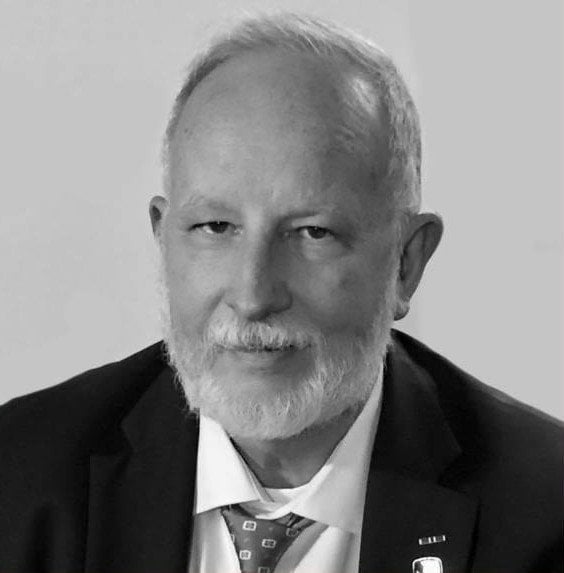
LTC Octavio Pérez, US Army (Ret.), Co-Founder and Senior Fellow, MSI²
Originally published by the Miami Strategic Intelligence Institute, a nonpartisan and conservative group of experts specializing in policy research, strategic intelligence, and consulting. The opinions are those of the author and do not necessarily reflect the position of the Institute. More information about the Miami Strategic Intelligence Institute is available at www.miastrategicintel.com
The views expressed in this article are those of the author and do not necessarily represent the official position of Gateway Hispanic.
About The Author